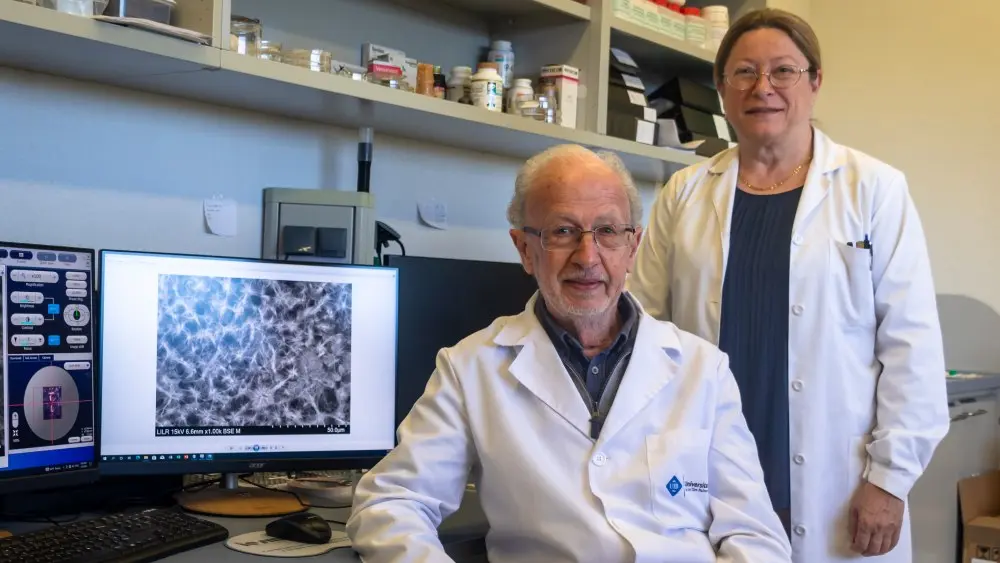
Coffee and cocoa hold a therapeutic key to fighting one of the most painful joint diseases: gout. From these two everyday products, the human body naturally produces 7-methylxanthine, a compound that has become the basis of an innovative treatment developed and patented in 2024 by Drs Fèlix Grases and Antònia Costa, researchers at the Renal Lithiasis Research Laboratory of the University of the Balearic Islands (UIB).
This scientific breakthrough will feature prominently in the Balearic Islands Ageing Yearbook 2026, which will be presented to the public this Wednesday, 25 November, at 7 pm at the Aljub of Es Baluard Museu d’Art Contemporani de Palma. The book, edited by Dr Carmen Orte, includes the article “A new strategy to prevent gout: how a drug is born”, written by Grases and Costa themselves, which will share this finding and the process behind this medical alternative for a condition that affects between 3 and 5% of the world’s population.
How do coffee and cocoa derivatives work?
The research, the result of more than a decade of work at the University Institute of Health Sciences Research (IUNICS), builds on something several observational studies had already suggested: people who drink coffee and eat cocoa have a lower risk of gout attacks. Although the amount of 7-methylxanthine the body produces in the blood after eating these theobromine-rich foods is not enough on its own to stop the disease, the Balearic researchers have managed to isolate the mechanism and harness it pharmacologically.
Specifically, Drs Grases and Costa have shown that this molecule — already used safely in medicine to prevent myopia — binds to urate in the synovial fluid surrounding the joints. In doing so, it increases its solubility and prevents it from building up and crystallising into sharp needles of sodium urate, which are directly responsible for the inflammation, redness and intense pain of gout attacks.
A safer alternative to current drugs
Until now, patients with this disease — caused by excess uric acid, often linked to genetic factors or to eating foods such as red meat, shellfish or alcohol — have had to rely on strict diets or on drugs such as anti-inflammatories and diuretics, which carry significant side effects, including a higher cardiovascular risk.
With this patent, born from the study of the components of coffee and cocoa, the UIB opens the door to a much safer and more effective treatment. The university now hopes that the interest already shown by the pharmaceutical industry will soon lead to a licensing agreement to bring the new drug to patients.