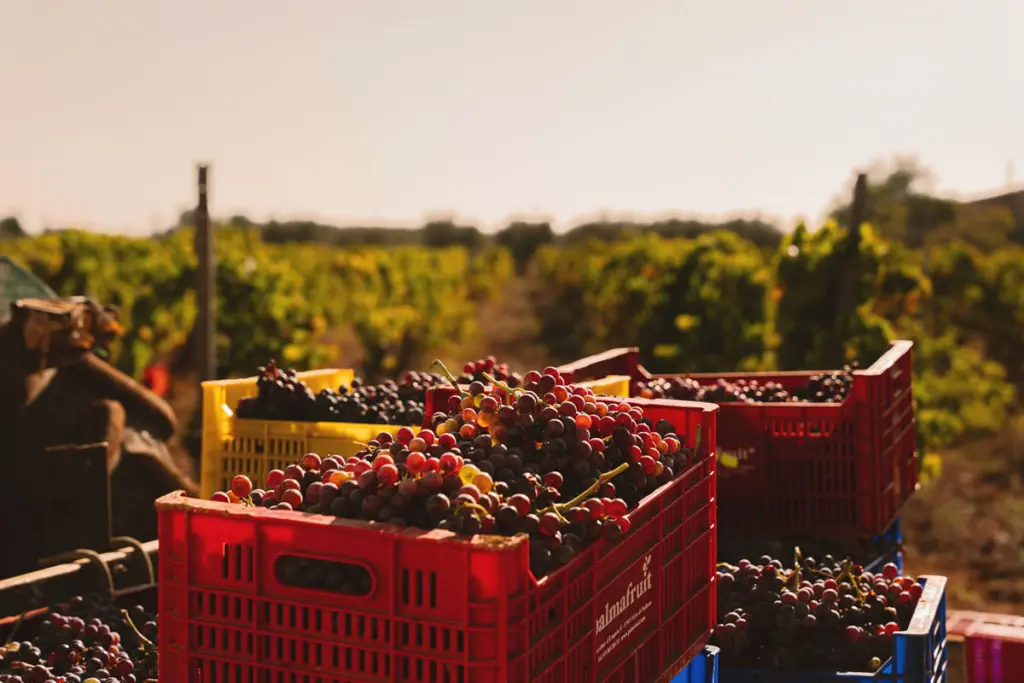
The area of the Designation of Origin (DO) Binissalem, which covers much of Mallorca’s Raiguer district, has kicked off this year’s grape harvest. Growers have started picking the earliest-ripening varieties, such as Muscat, giró ros and Chardonnay.
In fact, the winemakers and technical staff of the wineries are working flat out these days to monitor the quality of the fruit —assessing its sugar concentration, acidity and phenolic ripeness— with the aim of determining the optimum picking time for each estate and style of wine. Harvesting is expected to continue steadily until the end of September or the beginning of October.
Good quality and a recovery in production
Beyond the challenges of this harvest, the growers of the DO Binissalem give a very positive assessment of the health and composition of the fruit. After several harvests marked by low yields —especially last year’s—, forecasts for 2026 point to a return to normal harvest volumes, which means the campaign can be approached with considerable optimism as regards the production of wines protected by the quality seal.
A record summer and the impact of climate change
This year’s harvest is marked by extremely hot weather conditions. According to AEMET data, last July was the hottest and driest on record in the Balearic Islands since 1961 (with an anomaly of +3 ºC and highs exceeding 39 ºC in Mallorca), and August began with the fourth heatwave of the summer. These figures confirm the trend shown by the Winkler climate index, which records a 14 % increase in accumulated degree-days in the DO Binissalem area between 2013 and 2025, as well as a progressive rise in the number of days with highs above 35 ºC and lows that do not drop below 20 ºC.
To mitigate this impact and minimise water loss from the plants through evapotranspiration, the Regulatory Council of the DO Binissalem authorised supplementary irrigation of the vineyards at the beginning of June.
Likewise, growers are applying adaptation techniques in the field such as vine shading, cluster thinning, early harvesting and a focus on native varieties that are particularly resilient to heat, such as the recently authorised escursac, esperó de gall, giró negre and fogoneu, which join traditional local varieties such as mantonegro, moll, giró ros and gorgollassa.
Digitalisation of the control process
As has been customary since the 2020 harvest, the CRDO Binissalem will use a digital system to record grape deliveries to the wineries. This tool makes management easier for both operators and the Regulatory Council itself, eliminating paper and ensuring faster, more efficient and error-free control and certification throughout the reception process.
The wineries that belong to the DO Binissalem are: Jaume de Puntiró and Sebastià Pastor in Santa Maria del Camí, Ca sa Padrina, Can Ramis and Santa Catarina in Sencelles; Vinya Taujana in Santa Eugènia; and Biniagual, José Luis Ferrer, Vins Nadal, Can Verdura and Can Fumat in Binissalem.