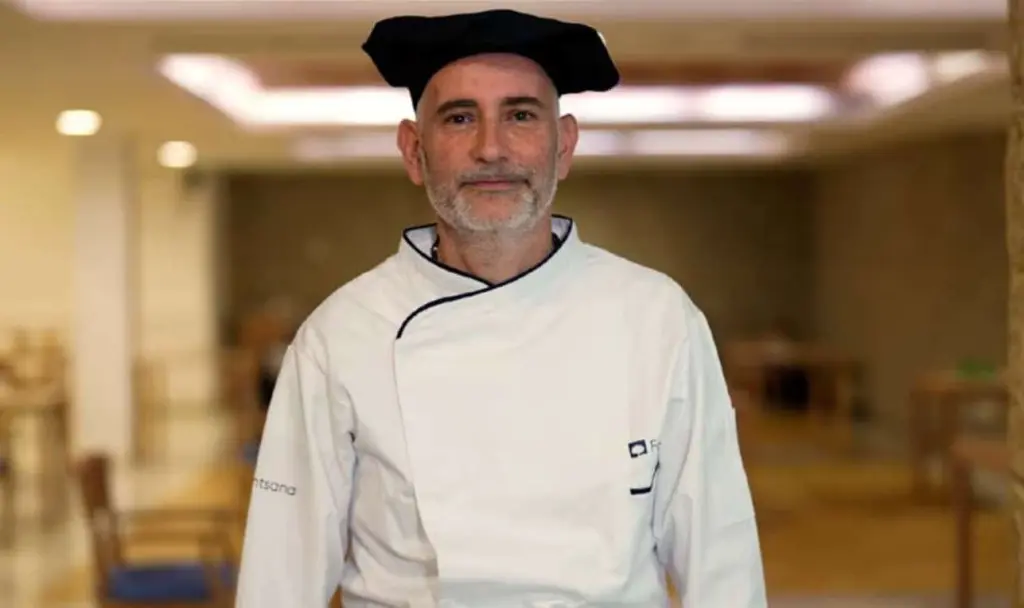
Toni Perelló is a cook who, after working in Michelin-starred restaurants, now puts his know-how into practice every day at the Fontsana Son Armadams care home (Palma), where he enjoys a much closer relationship with the residents.
After studying hospitality and tourism at the Institut Juníper Serra in Palma, Antoni Mauro Perelló López (53) did his first work placement at the famous restaurant that Michelin-starred chef Koldo Royo ran in the Balearic capital.
That was his debut in a world that has brought him a great deal of joy, as well as the opportunity to work in some of the best restaurants and hotels on the island, such as the Club Nàutic de Palma, the restaurant L’Olivera at the Belmond La Residència hotel (Deià), the Bahía Mediterráneo (Palma) and today’s Secrets Mallorca Villamil, where he was chef for 15 years.
From there, shortly before the pandemic, he moved into a sector he had long wanted to work in: catering and institutional food service. Then, a year ago, he joined the Fontsana Son Armadams care home for older people in Palma as its cook.
A very close relationship with the residents
For Toni Perelló, this change has been very rewarding, as contact with the residents is very close. Unlike the customers who visit restaurants or hotels, here you see the residents every day, all year round, so a much more affectionate relationship develops”, says Perelló.
This is how menus are prepared in care homes
In some respects, such as team management and purchasing, the food offering in care homes is very similar to that of restaurants and hotels. The biggest difference is that in care homes the menus are adapted to each resident.
According to Toni Perelló, “the first step is to draw up a standard base menu, which is sent to the nutritionist so that she can adjust the nutritional requirements and establish the different variations”.
At the Fontsana Son Armadams care home some 150 lunch and dinner menus are prepared every day. Toni explains that “around 70% are practically normal menus, with some variation such as less seasoning. Of the remaining 30%, 10% are puréed menus, another 10% are easy-to-chew and the rest are more specific diets for coeliacs, people who cannot take lactose or residents with other allergies or specific medical guidelines”.
Although these are personalised menus, prepared specifically for each person, residents do not usually appreciate this. And for Toni “that is normal. Many of the residents are people who have eaten well all their lives and are great connoisseurs of gastronomy. So even though our dishes are made with quality produce, are nutritionally excellent and are prepared with the same care as in 5-star restaurants, for them it is not the same”.
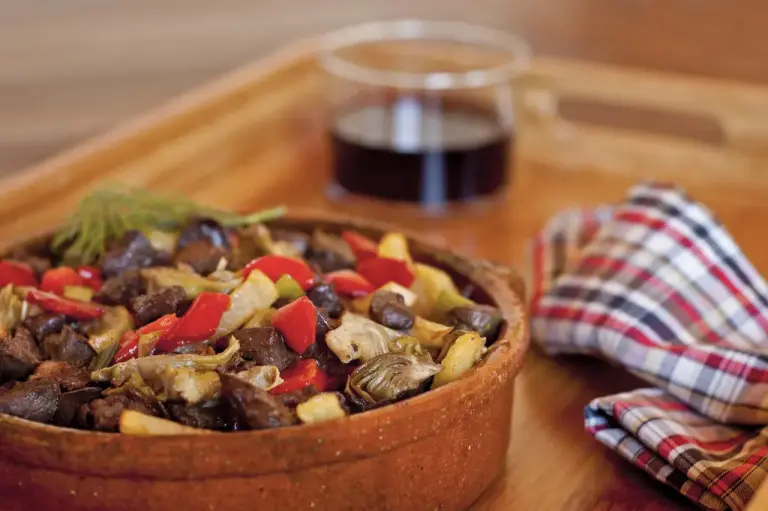
At that point, he explains, “they do not appreciate that these dishes are made specifically for them and are therefore very valuable. Instead, they think they would like to eat something else. Obviously, eating a plate of lentils with chorizo and botifarró is not the same as eating it with less seasoning and as a purée, even if both are of the same quality”.
The secret of happiness lies in making every meal a surprise
Even so, Toni acknowledges that “for many of them, mealtime is one of the best moments of the day. In a day that tends to be fairly routine, we feel obliged to innovate so that the food is a surprise every day”. In many cases, he explains, “food can lift the mood of the residents, many of whom are between 80 and 100 years old. To connect with them, we attach great importance to the presentation of the dishes. In the care home’s menus, everything is thought through and nothing is taken lightly”.
As is happening across the rest of the food sector, Toni confirms “that we are trying to increase the number of local suppliers, especially for produce such as fruit and vegetables. It is a trend we want to adopt progressively”.
Older people’s favourite dishes
For Toni Perelló, “the idea that older people do not like eating is a myth”. Many of them, he argues, “know more about gastronomy than a lot of people of my generation. And there are dishes that are real best-sellers”. Among them, he concludes, “are Sunday paella or fideuà, a speciality we all associate with family holidays, and tasting them helps to stir their memory. They also love spoon dishes, especially lentils; cannelloni, which are also very easy to eat; and desserts such as pudding and rice pudding, which are a little outside their usual diet”.